Feed now to ensure lambing success
Jill Hunter, Harbro Sheep Nutritionist

Jill Hunter, Harbro Sheep Nutritionist
With recent wet weather and wintry conditions currently with us and in the forecast, forage availability and ewe condition is at the forefront of minds. A slight drop in body condition mid-pregnancy is to be expected and doesn’t cause any harm, however a lot of ewes have had constant wet backs and nowhere dry to lie. Some of Scotland has seen twice the 20 year average rainfall in January alone.
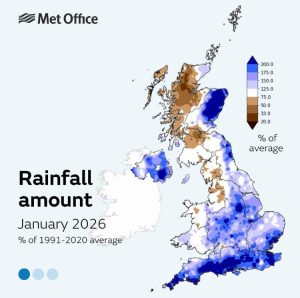
Different areas of the country, different farms and different breeds of ewes will of course feel the impact in different ways, but anecdotal stories would suggest ewes are dropping body condition more rapidly than ideal for this time of year, meaning the general recommendation is ewes should start to be feed quicker than usual, to prevent a rapid decline in body condition, to maintain good lamb growth and viability. This graph shows the link between lamb birth weight and mortality:
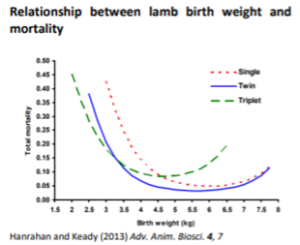
As most flocks are now heading into the last 6 weeks before lambing, we know 70% of lamb growth happens in this time. Not only are the lambs and fluid now restricting the size of the rumen, the ewe’s demand for protein and energy is also dramatically increasing, meaning feed must now be nutrient dense, high quality and beneficial to the health of the ewe and her lambs. If the lack of grazing or forage means the ewe cannot meet her energy or protein demand, the likelihood is lamb development will be impaired and lamb viability at birth will be poorer. We should also bear in mind the future fertility of the unborn ewe lambs can be affected at this stage.
Where ewes are dropping body condition, we should start to feed ewes now to avoid problems later on. It is worth topping ewes up with a little compound feed or even a high energy feed bucket, such as Energyze Vitality. Traditionally, sugar beet pulp may have been fed at this stage, however the current cost of beet pulp and its availability make it a less desirable option. A small quantity of ewe compound will provide the extra nutrition required, along with the additional benefit of a dose of vitamins and minerals to help maintain pregnancy.
Trial work has shown the quicker a lamb stands and suckles, the better chance it has of survival. In one study where ewes were supplemented with omega 3 oils before lambing, the lambs were half as likely to die within the first two weeks of life. Furthermore, the inclusion of Sel-Plex selenium has been shown to increase lamb survival by helping to increase shivering, mobilisation of brown fat and production of quality colostrum, all of which help the lamb to produce heat, stay warm and ward off hypothermia. The clever part about feeding Sel-Plex is the selenium ends up in the colostrum and milk, where traditional selenium sources wouldn’t. This means the lamb benefits from better quality colostrum, getting it off to the best start.
Omega 3 and Sel-Plex have such an impact on lamb survivability, meaning they are both included across the Harbro range of ewe feed and Energyze Vitality lick buckets.
Not only is it important what is fed pre-lambing, it’s also important how it is fed. Ewes respond exceptionally well to being fed at precisely the same time each day and any volume over 500g should be split into twice daily feeds. Feeding in this way can help reduce incidence of prolapses. Calibrating the snacker or other feeding kit is also important as different feeds weigh differently, depending on how energy dense they are. Finally, consider trough space and access to forage. A guide for hard feed trough space is 45cm per head and 15cm per head for forage and total mixed rations (TMR).
All being well, the ground will be dry by lambing time and there will be plenty fresh spring grass for ewes and lambs. Trial work shows once grass has reached 4cm tall, there is little need to continue to offer compound feed, except for ewe hoggs with lambs at foot, which have a huge nutrient demand post-lambing. Always keep in mind, the ewe starts to prepare for tupping, almost as soon as she’s lambed, so how good we are to her now will also impact next year’s lambing success.
The Harbro team of sheep specialists are on hand to answer any questions about the best options for your flock and how best to maintain their body condition from now, all the way through to lambing and out the other side.
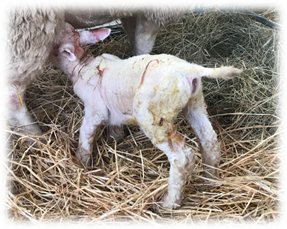
Lamb get up and go is essential to increase chance of survival
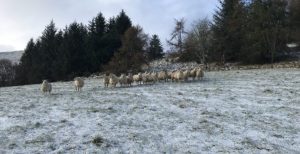
Ewes haven’t had a dry back for weeks