Colostrum: unlocking the potential of every calf and lamb
Jill Hunter, Beef & Sheep Nutritionist

Jill Hunter, Beef & Sheep Nutritionist
Tup sales are always a highlight of the year. It’s a chance to present the product of a couple of years’ work and select the next boys to join the flock. The current buoyancy in the sheep industry gives me great confidence in the job. As tups head out with the ewes and we look ahead to lambing time, I start thinking about how we can maximise the potential of the flock.
I often think about a comment made by a well-known cattle breeder; he doesn’t know which cow is his best cow. She’s simply the one he never sees. She gets in calf first time, calves herself and rears a calf whose weight gain never raises any concerns. I find myself wondering how we can breed more of these ‘ghost’ cows and ewes.
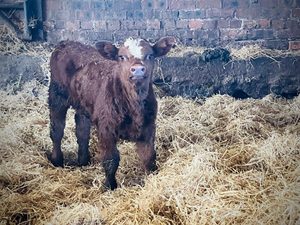
We spend years selecting genetics to produce animals to grow efficiently, breed reliably and rear the best offspring. But how much of that potential are we losing because we don’t get the nutrition and management right? In a previous column, I wrote about epigenetics and how we can influence gene expression at the point of conception. The next piece of the puzzle is colostrum. We can invest in the best genetics in the world, but if a newborn lamb or calf doesn’t get the right start, we risk compromising our investment from day one.
There is nothing more important in those first hours of life. Getting colostrum right helps produce strong, thriving lambs and calves that rarely need intervention, while the ones that miss out can face a tougher start, with health and performance impacted throughout their lives.
AHDB reports that a strong, healthy lamb which is up and sucking within 15 minutes of birth has a 90–95% chance of surviving to 90 days.
Unlike humans, antibodies cannot pass through the placenta of ruminants, meaning colostrum is the only way to provide immunity in early life. They are relatively big molecules, so the gut must open to allow them to be absorbed. As soon as the lamb or calf is born, it is a race against time to get colostrum into them, before the gut starts to close and the antibodies can no longer be absorbed. We want to get a big bellyful, as quickly as possible before the gut wall starts to close and the goodness can no longer be absorbed.
Typically, colostrum contains twice the fat and four times the protein of milk. This helps explain why nutrition in late pregnancy is so important. To support quality colostrum production, it is essential to have a diet which balances rumen degradable protein with rumen by-pass protein and additional energy.
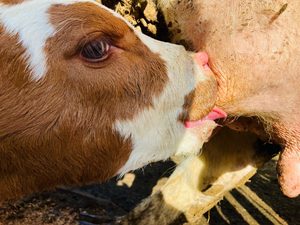
I recently worked with a customer who was struggling with pneumonia in spring-born calves, particularly around weaning and into the first half of the winter. Beyond the animal and financial cost of treatments, the repeated setbacks were affecting staff morale. Rather than simply adding more vaccines and treatments later in the year, we stepped back and looked at colostrum management at calving time.
Colostrum production begins around 5 weeks before calving, so we reviewed the dry cow diet and paid particular attention to lean cows and those carrying twins, which always need extra support. We corrected the mineral pack and introduced a fishmeal-replacer product called Ruminant Greengold, to improve the supply of rumen-bypass protein and other goodies, including omega-3.
We also started recording which calves needed help to suckle, were tubed or required additional colostrum. Using a Brix refractometer to assess colostrum quality, we could clearly see an improvement in the quality of what was being produced. A Brix refractometer is useful as it’s a quick way to tell how good quality the colostrum is. However, it doesn’t tell us whether the calf has absorbed enough of the available antibodies. Where problems are suspected, blood testing a sample of lambs or calves under 7 days old can help establish whether the whole system is working. Just as importantly, recording interventions refocused the whole calving team on getting colostrum management right.
The results on this farm were encouraging. Pneumonia treatments reduced considerably and when cases did occur, we could look back at the calf’s early-life records and it often showed it missed out on enough colostrum. I do recognise calf health is influenced by several factors, but the reduced cases of pneumonia proved to me the value of reviewing the system right from pre-calving rather than waiting until problems appeared later in the year. It’s better to be prepared than to be firefighting.
So, this lambing and calving season, I’d encourage you to prove this to yourself. Should we review what happens on your farm ahead of lambing and calving? Could you record the numbers of a few calves or lambs that need help getting their first feed, follow them right through to sale time and see how they perform?
Are the animals you spend the most time treating in spring the same ones that catch your eye as poor-doers later in life? Could the difference between an animal which constantly needs attention and one that quietly gets on with the job start with that very first feed? Perhaps the next generation of ‘ghost’ cows and ewes begins with colostrum.