With the weather impacting harvest and farmers in some areas already dipping into winter forage and feed stocks, now is good time to look at options and plan for the winter months. With feed availability and costs likely to be unpredictable, the emphasis should move towards efficiency and not just what feed costs, but what it delivers in terms of performance.
If you’re considering using home-grown cereals, then the first thing to do would be to get the grain analysed so you know what you’re working with, and our team can advise accordingly.
From initial cereal samples, we’ve seen some good results but also some with quite low bushel weight, small grains and very dry barley. These cereals can be utilised for feed but need to be treated and processed properly.
To get the most feed value, we need to be able to process the grain as well as we can. This is difficult when the grain size is so small, so we would advise:
- Treating the grain whole with Maxammon.
- Add water to take the grain to 17–18% moisture, sheet the grain for the usual two weeks to let the Maxammon work. It will swell some of the smaller grains and make them easier to bruise after treatment.
- Don’t forget, Maxammon breaks the lignin in the skin of the grain, making it more digestible, which means your cattle will get more from the feed.
- Speak to our Mobile Mill & Mix team about our processing and treatment service.
With the weather impacting harvest and farmers in some areas already dipping into winter forage and feed stocks, now is a good time to look at options and plan for the winter months.
With feed availability and costs likely to be unpredictable, the emphasis should move towards efficiency and not just what feed costs, but what it delivers in terms of performance.
If the grain is low in starch (<57%), some wheat (10–20% cereal proportion) can be added to the diet to raise the energy levels and help maintain animal performance.
Additional Advice
- Don’t treat too much grain up front, as it will sweat with the extra moisture. We can help put a plan in place to manage ongoing treatment and ensure your feed stock is maintained.
- Take the cover/sheeting off after two weeks, if not before.
- Analyse grain before and after treatment, so we can balance the diet.
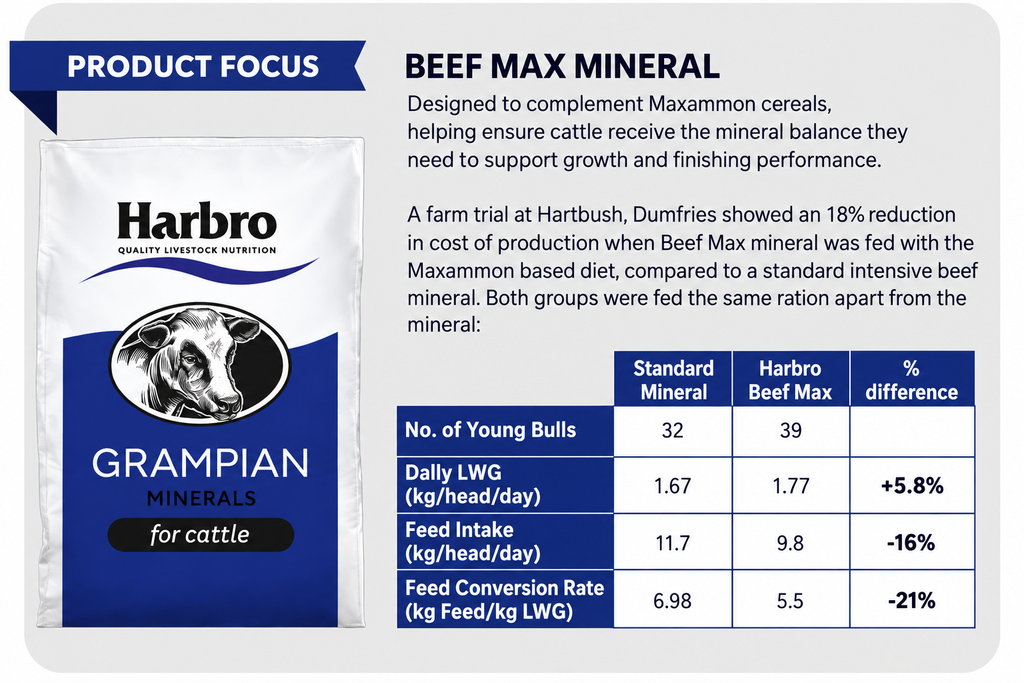
- This year’s grain will be higher in fibre, so it is important to use our Beef Max mineral to balance the diet.
If you’re feeding Maxammon-treated cereals to growing or finishing cattle, pairing them with the right mineral is key to maximising performance.