Menthol Beef: More than just a Mineral
Jill Hunter, Harbro Beef & Sheep Nutritionist

Jill Hunter, Harbro Beef & Sheep Nutritionist
It’s inevitable groups of cattle will have to be mixed at housing, but limiting the number of times this happens will help cattle settle quicker. Harbro trial work has shown mixing groups can disrupt the social hierarchy significantly, with cattle taking around 12 days to return to their previous daily liveweight gain.
Nutrition is also critical. Maintaining feed intake is important because consistent intake supports rumen function and allows cattle to make the most of the energy and protein supplied in the diet. The immune system also has significant energy and protein requirements, so when cattle are not eating well, their ability to respond effectively to challenges can be compromised.
Creep feeding calves or trough feeding grazing cattle before housing can help them get used to eating and make the transition into the shed smoother. Maintaining feed intake through this period can help reduce the nutritional stress associated with a change in environment and diet.
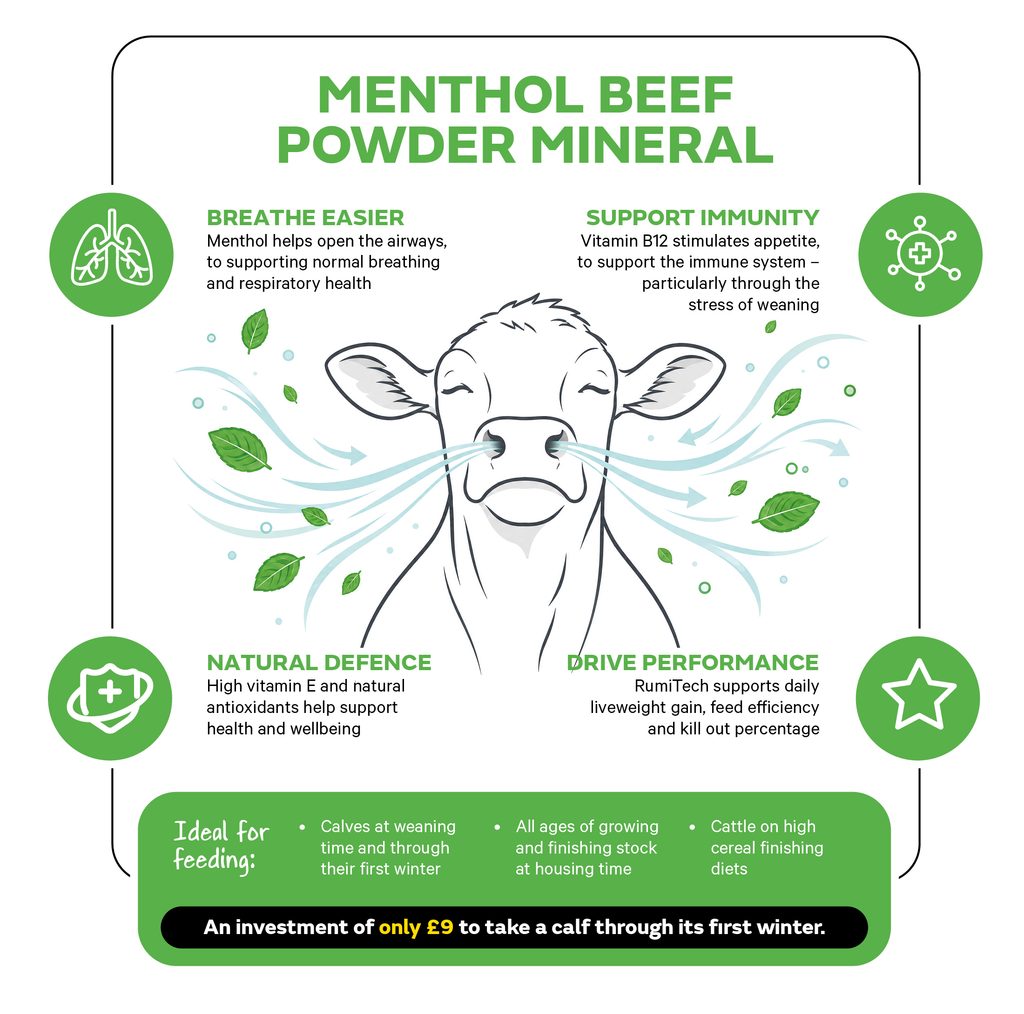
Good mineral nutrition is about more than simply supplying cattle with vitamins and minerals. Grampian Menthol Beef has been developed alongside some of Scotland’s leading suckled calf producers as a specialist solution combining a balanced supply of essential vitamins and minerals with menthol.
The inclusion of menthol provides an additional component to the nutritional programme, particularly at times when cattle may be under increased environmental or production pressure. This makes Menthol Beef particularly relevant during periods such as post-weaning, housing, dietary changes and periods of rapid growth.
Menthol Beef also contains antioxidants to support the animal’s natural defence mechanisms, alongside additional vitamin B12 to support appetite and feed utilisation. The product can be added into a total mixed ration (TMR), home-mixed blends or top dressed onto silage, making it a flexible option for different feeding systems.
Rather than viewing mineral supplementation as simply a tick-box exercise, it should form part of a wider strategy to maintain intake, support rumen function and optimise animal performance.
Menthol Beef is more than just a mineral — it is another tool to help you manage your cattle through the challenging housing period working in partnership with a balanced diet and good stockmanship.